

Dry Flaky Skin on Face: Causes, Routine, and What Helps
Persistent dry flaky skin on face is usually a sign that the skin barrier is stressed, not simply that you need more moisturizer. The stratum corneum, which is the skin’s outer layer, relies on a balanced mix of lipids and water to stay smooth and comfortable. When that barrier is disrupted, water escapes more easily and the face can feel tight, rough, or flaky even after moisturizer.
Common triggers include harsh cleansing, over-exfoliation, dry air, hot water, retinoids, acne treatments, and low humidity. In some cases, dry flakes may also come from skin conditions such as eczema, seborrheic dermatitis, psoriasis, or rosacea. This guide explains what causes dry flaky skin on face, how to calm it, which ingredients help, and when to seek professional care.
⚡ Quick Answer
Dry flaky skin on face often happens when the skin barrier loses water and lipids faster than it can recover. Common triggers include harsh cleansing, over-exfoliation, dry air, hot water, retinoids, and underlying skin conditions. A simple routine with gentle cleansing, barrier-supporting moisturizer, and irritation-calming support can help skin feel more comfortable while the barrier recovers.
Key Takeaways
- Dry flaky skin on face often points to a weakened skin barrier, not just a lack of moisturizer.
- Common triggers include harsh cleansers, over-exfoliation, dry weather, hot showers, retinoids, and low humidity.
- Flaking can also come from eczema, seborrheic dermatitis, psoriasis, or rosacea, especially when redness, itching, or burning is persistent.
- A short-term “reset” routine should focus on gentle cleansing, moisturizer, and an occlusive layer on very dry areas.
- Helpful ingredients include ceramides, glycerin, petrolatum, panthenol, squalane, and hypochlorous acid.
- Prejuv Reset Spray — a 3-ingredient, 100 ppm HOCl formula can fit into a simple routine for skin that feels irritated, reactive, or overworked.
What Causes Dry Flaky Skin on the Face?
Dry skin and flaking on the face usually happen when the skin barrier is not holding moisture well. The barrier depends on lipids such as ceramides, cholesterol, and fatty acids. When those lipids are depleted, the surface can feel rough, tight, and visibly flaky.
Barrier lipid depletion: When the skin lacks enough surface lipids, moisture escapes more easily. This can make the face feel dry shortly after applying moisturizer, especially on the cheeks, around the mouth, and near the nose.
Acid mantle disruption: Healthy skin is naturally slightly acidic. High-pH soaps, harsh cleansers, and over-washing can disrupt that balance. As a result, the skin may feel tight after cleansing and become more prone to flaking.
Over-cleansing and over-exfoliation: Foaming cleansers, daily scrubs, strong acids, frequent peels, and retinoids used too quickly can strip protective lipids. If your skin stings when applying basic products, read our guide to over-exfoliated skin recovery.
Environmental factors: Cold weather, windy weather, central heating, air conditioning, hot showers, and sun exposure can all increase dryness. These triggers are especially common during winter or in low-humidity spaces.
Underlying conditions: Eczema, seborrheic dermatitis, psoriasis, and rosacea can all cause facial flaking. If dryness keeps returning with redness, itching, burning, or thick scaling, it may need more than a basic moisturizer.
Medications and health factors: Some acne treatments, retinoids, isotretinoin, and certain health conditions can make skin feel drier. If your dry flaky skin started after a new medication, ask a healthcare professional for guidance.
Who Is Most Likely to Get Dry, Flaky Facial Skin?
- People with naturally dry or sensitive skin types.
- People over 40, when oil production and barrier lipids may become less consistent.
- People living in cold, dry, windy, or heated indoor environments.
- People using retinoids, benzoyl peroxide, exfoliating acids, or acne treatments without enough barrier support.
- People with a history of eczema, psoriasis, seborrheic dermatitis, or rosacea.
Dry Flaky Skin vs. Other Conditions: How to Tell the Difference
Not all facial flaking is simple dry skin. The pattern, texture, and symptoms can help you decide whether to simplify your routine or seek professional care. If flaking is painful, spreading, crusting, or not improving, contact a healthcare provider.
Dry Skin vs. Dehydrated Skin
Dry skin lacks oil, while dehydrated skin lacks water. Both can look flaky, but they need slightly different support.
- Dry skin: Often feels rough, tight, dull, and flaky across the cheeks or forehead. It usually improves with richer moisturizers and barrier-supporting ingredients.
- Dehydrated skin: May feel tight but still look oily. It may show fine surface lines and often responds to humectants plus a moisturizer or occlusive layer.
- Routine focus: Dehydrated skin needs water-binding ingredients like glycerin or hyaluronic acid. Dry skin usually needs lipids such as ceramides, squalane, and richer creams.
Dry Skin vs. Over-Exfoliated Skin
- Typical dry skin: Flaky, tight, and sometimes mildly itchy, but not always painful.
- Over-exfoliated skin: Burning, stinging, shiny peeling, and red patches around the nose, mouth, or eyes.
- Common causes: Daily scrubs, frequent AHAs or BHAs, peels layered with retinoids, or too many active products at once.
- Key insight: Over-exfoliated skin often gets worse when you keep exfoliating to remove flakes. It usually needs a break and a barrier-focused routine.
Dry Skin vs. Eczema on the Face
Facial eczema can look like red, inflamed, itchy patches with visible scaling. It often appears around the eyes, mouth, or cheeks. During flares, the skin may feel raw or intensely itchy.
Moisturizers can help support comfort, but moderate or recurring eczema may need guidance from a dermatologist. Seek care if itching disrupts sleep, patches ooze, or symptoms keep returning.
Dry Skin vs. Seborrheic Dermatitis and Other Causes of Facial Flaking
- Seborrheic dermatitis: Often appears as red, greasy-looking skin with yellowish flakes around the eyebrows, sides of the nose, scalp, or beard area.
- Psoriasis: May show sharply bordered red plaques with thicker silvery-white scale, often near the hairline or ears.
- Rosacea: May include flushing, persistent redness, visible vessels, sensitivity, and dry-looking patches triggered by heat or harsh products.
For more on irritation patterns, see Irritated Skin: Causes, Symptoms, and What Helps.
How to Help Dry Flaky Skin on Your Face Fast
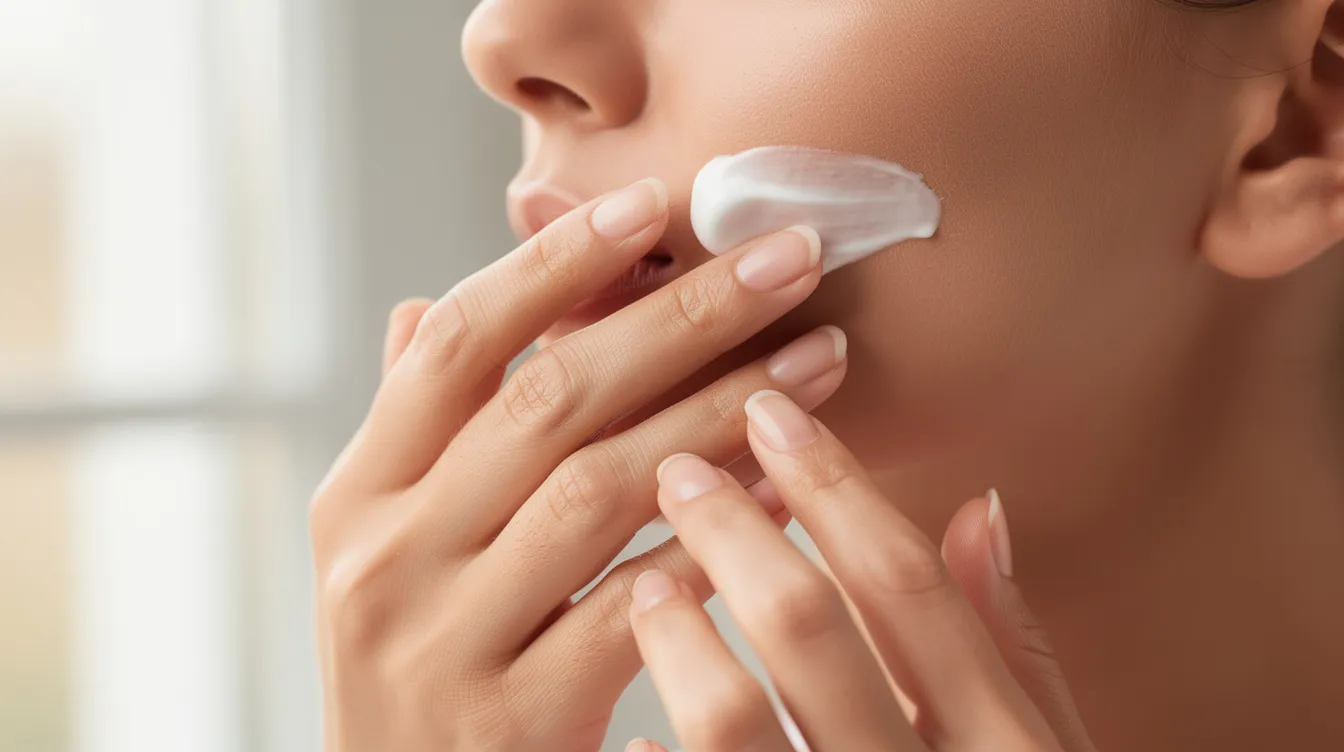
When your face is visibly dry, flaky, tight, or peeling, simplify your routine first. Pause exfoliators, scrubs, peels, retinoids, strong acne treatments, and fragranced products until the skin feels calmer.
Emergency Barrier-Support Routine
Use this simple sequence morning and night for several days, or until the skin feels less tight and reactive.
- Gentle cleanse: Use a low-pH, non-foaming cleanser. If the skin feels very dry, rinse with lukewarm water in the morning.
- HOCl spray: Mist Prejuv Reset Spray or another pH-balanced HOCl mist on clean skin. Let it dry without wiping.
- Ceramide moisturizer: Apply a fragrance-free moisturizer while skin is slightly damp.
- Occlusive layer: At night, apply a thin layer of petrolatum over the driest areas to help reduce water loss.
"When skin is actively flaking, the goal is not to polish the flakes away. The goal is to reduce irritation and support the barrier."
What Not to Do When Your Face Is Dry and Flaking
- Do not pick or peel flakes. This can create small breaks in the skin and prolong irritation.
- Avoid physical scrubs. Rough exfoliation can make stressed skin feel worse.
- Pause chemical exfoliants. Stop glycolic, lactic, salicylic acid, and peels during acute dryness.
- Pause retinoids temporarily. Reintroduce them slowly once the skin feels stable.
- Skip alcohol-heavy toners. These can increase tightness and dryness.
The Right Skincare Routine for Dry, Flaky Skin on the Face
Once the acute flare calms, a steady routine can help reduce recurrence. The goal is to cleanse gently, layer hydration, add barrier lipids, and protect the skin during the day.
Morning Routine for Dry Flaky Skin
- Cleanse gently or rinse: Use a mild, non-soap cleanser. If skin is very dry, rinse with lukewarm water only.
- Use HOCl spray: Mist Prejuv Reset Spray and let it dry without rubbing.
- Add a barrier serum if needed: Panthenol or glycerin-based formulas can support comfort.
- Apply moisturizer: Choose a fragrance-free cream with ceramides or other barrier-supporting ingredients.
- Finish with sunscreen: Use broad-spectrum SPF 30 or higher to help protect against sun-related dryness and irritation.
Night Routine for Dry Flaky Skin
- Cleanse gently: Remove sunscreen with a non-stripping cleanser.
- Use HOCl spray: Mist after cleansing if skin feels red, reactive, or uncomfortable.
- Apply moisturizer: Use a generous layer on areas with the most flaking.
- Seal very dry patches: Apply a thin layer of petrolatum over the driest areas when needed.
Retinoids and exfoliants should return slowly. Start once weekly after one to two weeks of barrier support, and stop again if stinging or peeling returns. For a simpler framework, see Minimal Skincare Routine for Irritated Skin.
Ingredients That Help vs. Ingredients That Can Make Dry Flaky Skin Worse
The ingredient list matters. Helpful products usually combine humectants, emollients, and occlusives. Irritating products often include fragrance, harsh surfactants, strong acids, or too many active ingredients at once.
Ingredients That Help Dry, Flaky Skin
| Ingredient | How It Helps |
|---|---|
| Ceramides | Help replenish barrier lipids and support a smoother skin feel. |
| Panthenol | Helps soothe discomfort and support skin comfort. |
| Squalane | Softens rough-feeling areas and supports dry skin comfort. |
| Glycerin or hyaluronic acid | Attracts water to the skin surface; works best when followed by moisturizer. |
| Petrolatum | Forms an occlusive layer that helps reduce moisture loss from dry areas. |
| HOCl | Supports skin that feels irritated, reactive, or visibly stressed. |
Ingredients and Practices That Can Make Dry Flaky Skin Worse
- Alcohol-heavy formulas: These can increase tightness and dryness.
- Fragrance and essential oils: These are common triggers for sensitive or reactive skin.
- Sulfate cleansers: Harsh surfactants can leave skin feeling stripped.
- Strong AHAs or BHAs on compromised-feeling skin: Pause these during active flaking.
- Rough scrubs: These can irritate flakes instead of solving the underlying dryness.
For sensitive skin, choose fragrance-free products and introduce new treatments slowly. Patch testing is especially helpful if your skin often reacts to new products.
Long-Term Prevention: How to Keep Dry Flaky Skin from Coming Back
Prevention depends on consistency. A gentle routine, lower-irritation product choices, and a more supportive environment can reduce repeat dryness.
Optimize Your Environment

Dry indoor air can make flakes more noticeable, especially during colder months. A humidifier may help if your home is very dry. Avoid sitting directly under heating vents, and protect skin from cold wind when possible.
Use Smart Shower and Cleansing Habits
Use lukewarm water instead of hot water. Keep showers short, and avoid washing the face repeatedly throughout the day. After cleansing, apply moisturizer while the skin is still slightly damp.
Choose Products Carefully
- Choose fragrance-free products when your skin feels reactive.
- Patch-test new products for 24–48 hours before applying them to the full face.
- Reintroduce retinoids, exfoliants, or acne treatments slowly.
- Use sunscreen daily to reduce dryness linked to UV exposure.
- Support the lips and hands too, since cold weather often affects more than the face.
If dryness follows sun exposure, you may also find this guide helpful: Sun-Damaged Skin Recovery Guide.
Frequently Asked Questions About Dry Flaky Skin on Face
What causes dry flaky skin on the face?
Dry flaky skin on the face often comes from a weakened skin barrier, harsh cleansing, over-exfoliation, dry weather, hot water, or skin conditions such as eczema or seborrheic dermatitis.
Why is my face dry even when I moisturize?
Your moisturizer may be too light, missing occlusive ingredients, or applied after the skin has already lost too much water. In some cases, over-exfoliation, retinoids, dry air, or an underlying skin condition can keep flakes coming back.
When should I see a healthcare provider?
Seek care if flaking comes with pain, swelling, oozing, crusting, signs of infection, or symptoms that last longer than two to three weeks despite gentle care. You should also seek guidance if flaking appears suddenly or spreads quickly.
Can I exfoliate dry, flaky skin?
Pause exfoliation when skin is actively dry, flaky, or stinging. Once the barrier feels calmer, you can reintroduce gentle exfoliation slowly, but daily exfoliation is usually too much for reactive skin.
Is lotion, cream, or ointment better for dry flaky facial skin?
Creams and ointments usually work better than lightweight lotions for dry flaky facial skin. Creams are useful for daily moisturizing, while ointments can help seal very dry patches at night.